

About
Computer science studies the theory, design, development and application of software and software systems in a wide range of fields from artificial intelligence and human-computer interaction to computational modelling and computer graphics.
- Three- or four-year degree
- Full- or part-time program
- You can start a Bachelor of Science right after high school; Computer Science major selection for second year is competitive
- You can begin this program at the Saskatoon or Prince Albert campuses or at an off-campus location
What you will learn
You will learn about a wide range of topics including design and maintenance of software systems, distributed systems, human-computer interaction, computational modeling, artificial intelligence, mobile computing, programming languages, image processing, and computer graphics. You will learn to combine creative problem solving and analytical skills to create practical and innovative software.
A first-year schedule sample
This program offers you the opportunity to take courses in many different subject areas. Here’s what a typical first-year schedule might look like:
| Course | Description |
|---|---|
Fall Term |
|
| CMPT 141a | Introduction to Computer Science |
| MATH 163ab | Introduction to Mathematical Reasoning |
| PHIL 133c | Introduction to Ethics and Values |
| INDG 107d | Introduction to Canadian Indigenous Studies |
| ECON 111e | Introductory Microeconomics |
Winter Term |
|
| CMPT 145a | Principles of Computer Science |
| MATH 164ab | Introduction to Linear Algebra |
| HIST 155c | History Matters Science and Environment |
| PHYS 115e | Physics and the Universe |
| LING 111e | Structure of Language |
a Required course for the major
b One of the course options to complete the Quantitative Reasoning Requirement
c One of the course options to complete the English Language Writing Requirement
d One of the course options to complete the Indigenous Learning Requirement
e One of the course options which may be used in the Breadth or Cognate Requirements
The Course and Program Catalogue has the complete and official listing of required classes and their descriptions for this program.
CMPT 317: Introduction to Artificial Intelligence
A survey of Artificial Intelligence techniques and underlying theory. Topics include problem solving and planning, knowledge representation techniques, reasoning engines and expert systems, and a tour of various application areas of Artificial Intelligence including machine learning, natural language processing and high-level computer vision.
CMPT 350: Web Programming
Focuses on the concepts, technologies and tools needed for the development of web-centric applications. Special emphasis will be given to client-server programming, scripting, integration of existing application and high-level networking issues, e.g., use of SOAP.
CMPT 485: Computer Graphics and Animation
Advanced topics in computer graphics, concentrating on image formation and modelling issues. The implications of the data-driven approach to computer graphics. Simulation and non-parametric methods contrasted. The course will involve a project investigating and implementing some current algorithms from the literature.
The Computer Science Professional Internship Program allows undergraduate students to obtain 12 or 16 months of practical, "on-the-job" experience with a sponsoring company such as ESTI, IBM, SED Systems and zu just to name a few! This takes place prior to completing the final year of the undergraduate degree program.
Computer science students may choose to focus their courses to develop specialized knowledge and skills in areas including:
- Algorithmics
- Artificial intelligence
- Computational modelling
- Computer game development
- Computer graphics
- Computer systems
- Cybersecurity
- Information visualization
- Programming languages
- Social computing
- Software development
- Web development
Careers
Our programs are designed to prepare graduates for careers across all sectors of the information technology industry, as well as for graduate studies and research. The following are just a few of the career opportunities available:
- Software developer
- System administrator
- Web designer
- Game designer
- Business systems analyst
Tuition estimates
| Canadian students | International students | |
|---|---|---|
| Tuition | $8,449 | $40,894 |
| Student fees | $1,331.66 | $1,331.66 |
| Books | $1,500 | $1,500 |
| Total | $11,280.66 | $43,725.66 |
Tuition will vary depending on the type and number of classes you take in a year. This estimate reflects a typical amount you could expect to pay in your first year if you enroll in a full course load, the maximum number of courses allowed (2026–2027 Canadian dollar rates).
Student fees are used to fund specific student benefits, including health, vision and dental coverage, a bus pass, recreational programs and fitness centre access.
The cost of books and supplies varies widely depending on the courses you choose. It is recommended that you budget between $1,500–$2,500 per year.
Program options
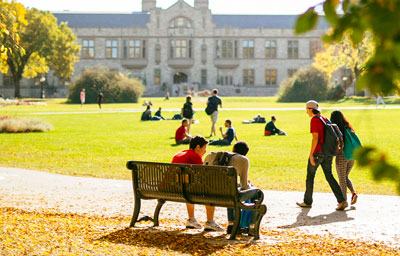
These Bachelor of Science (B.Sc.) Computer Science degrees are offered by the University of Saskatchewan's College of Arts and Science:
- Bachelor of Science Four-year (B.Sc. Four-year) - Computer Science
- Bachelor of Science Three-year (B.Sc. Three-year) - Computer Science
- Bachelor of Science Honours (B.Sc. Honours) - Computer Science
- Bachelor of Science Honours Software Engineering Option (B.Sc. Honours SE) - Computer Science
- Bachelor of Science Double Honours - Computer Science
You should consult with an academic advisor in the college when you begin your studies to decide if you want a four-year, three-year or honours degree.
Admission requirements
Competitive selection for the Computer Science major takes place at the end of your first year based on your average in specific computer science and mathematics courses.
The following requirements are for admission to a Bachelor of Science program in the College of Arts and Science.
Your information
Admission requirements depend on your situation; please tell us about yourself.
Application deadlines
| Start term | Application deadline | International deadline |
|---|---|---|
|
Winter January 2027 |
Dec. 1, 2026 Documents due: Dec. 15, 2026 |
Sept. 1, 2026 Documents due: Oct. 1, 2026 |
|
Spring May 2027 |
April 1, 2027 Documents due: May 1, 2027 |
Feb. 1, 2027 Documents due: March 1, 2027 |
|
Summer July 2027 |
May 1, 2027 Documents due: June 1, 2027 |
March 1, 2027 Documents due: April 1, 2027 |
|
Fall September 2027 |
July 15, 2027 Documents due: Aug. 1, 2027 |
May 1, 2027 Documents due: June 1, 2027 |
|
Winter January 2028 |
Dec. 1, 2027 Documents due: Dec. 15, 2027 |
Sept. 1, 2027 Documents due: Oct. 1, 2027 |
Application process
Apply for admission to the College of Arts and Science
Students interested in computer science should apply for admission to a Bachelor of Science program in the College of Arts and Science. When selecting your planned program of study, choose Arts and Science - Bachelor of Science - Undeclared Major or another B.Sc. option if majoring in computer science is something you want to pursue in the future.
Complete required first-year classes and declare your interest in majoring in Computer Science
In your first year in the College of Arts and Science, you'll take foundational computer science and mathematics courses, introducing key programming and problem-solving concepts used throughout the degree:
After completing the required courses, you will be able to declare your interest in majoring in computer science to the department. The number of available seats will vary each year depending on course capacity. Selection is competitive and based on a ranking determined by your average in the required computer science and mathematics courses.
Ready to apply?
New students: Create an admissions account and start your application for admission today. When you are ready to submit your application, you will be assessed a non-refundable application fee of $120 CAD.
After completing the required first-year classes, you can declare your interest in majoring in Applied Computing, Computer Science, or the Certificate in Computing.
Related programs
If you are looking for graduate level (master's or Ph.D.) programs please consult our graduate students' website.

Stay connected
Do you want us to send you important reminders, information about our programs or notifications about USask events?