About
These certificates combine engineering design, business fundamentals, and hands-on learning so you can build the skills to turn ideas into real-world impact. Tap into USask's technological innovation ecosystem and the SIGMA educational skill accelerator, which supports student founders with coaching, community, and experiential learning.
Quick facts
- One- or two-year certificate programs
- You cannot begin these programs directly from high school
- In-person classes at USask's main campus in Saskatoon
- Can be completed concurrently alongside other degree programs
This nine course (26 credit) certificate program focuses on developing the skills needed to identify strong tech-based opportunities, design innovative solutions, and commercialize those ideas. You'll learn the fundamentals of innovation management, entrepreneurship, engineering economics, and intellectual property, while also applying your knowledge through design-based capstone work. The program is ideal for students who want a structured, practical pathway into technology-driven venture development or intrapreneurship roles.
Featured classes
GE 450.3 Technology Innovation Management
This is a course on the management of technology innovation. It explores the processes by which technology is developed, and how those processes can be managed to garner successful business outcomes. The course covers theories of tech innovation and of how to manage such processes, as well as case studies of successes and failures. Students will learn how to develop their own plan for managing technology that they develop and innovate.
GE 451.1 Intellectual Property Fundamentals
This course includes a survey of key aspects of Canadian intellectual property law and intellectual property-related international undertakings. It is meant for non-law students. Included will be discussions on substantive intellectual property regimes such as copyright, industrial design, integrated circuit topographies, trademarks, patents, and, perhaps, plant breeder's rights (depending upon class composition). Also considered will be laws of confidential information and trade secrecy, means of transferring intellectual properties and other transactions, remedies for circumstances of infringement, and pertinent University of Saskatchewan policies.
GE 431.3 Engineering Entrepreneurship Capstone
This course integrates entrepreneurship with engineering design, in equal measure. Students will be tasked with identifying an entrepreneurial opportunity in the technology environment, pursuing it in terms of defining the opportunity (needs analyses, problem definition, market analysis), and developing a value-added solution to the problem.
The Course and Program Catalogue has the complete and official listing of required classes and their descriptions for this program.
This five course (13 credit) certificate program consists of an organizational management focus. Gain knowledge in both business fundamentals and the processes to design and commercialize technologically innovative solutions. You will cultivate a strategic mindset, learning how to assess an organization's capacity for innovation, engage effectively with key stakeholders, and shape their organization so that they can continuously build and commercialize their innovations. The program is jointly delivered by the Ron and Jane Graham School of Professional Development in the College of Engineering and Edwards School of Business.
Featured classes
COMM 205.3 Introduction to Operations Management
Introduces students to concepts and decision-making techniques used in the design, planning, execution, control, and improvement of operations of world-class manufacturing and service companies. It begins with introductory issues such as operations strategy and forecasting, continue with design topics such as product design, capacity planning, process design, facility layout, work design, and location planning, then covers quality management and control, and finally ends with planning decisions such as inventory management, aggregate planning, material requirements planning, just-in-time systems, scheduling, and supply chain management. Time permitting, project management and waiting line management may be covered too.
GE 450.3 Technology Innovation Management
This is a course on the management of technology innovation. It explores the processes by which technology is developed, and how those processes can be managed to garner successful business outcomes. The course covers theories of tech innovation and of how to manage such processes, as well as case studies of successes and failures. Students will learn how to develop their own plan for managing technology that they develop and innovate.
GE 451.1 Intellectual Property Fundamentals
This course includes a survey of key aspects of Canadian intellectual property law and intellectual property-related international undertakings. It is meant for non-law students. Included will be discussions on substantive intellectual property regimes such as copyright, industrial design, integrated circuit topographies, trademarks, patents, and, perhaps, plant breeder's rights (depending upon class composition). Also considered will be laws of confidential information and trade secrecy, means of transferring intellectual properties and other transactions, remedies for circumstances of infringement, and pertinent University of Saskatchewan policies.
The Course and Program Catalogue has the complete and official listing of required classes and their descriptions for this program.
This five course (13 credit) certificate program prepares you for early-stage product development and the commercialization of new technological products. You will build skills in market research, product definition, customer analysis, and product-market fit—core competencies for entrepreneurs, product managers, and innovation-focused engineers. The program emphasizes understanding users, validating needs, and translating insights into engineering and business decisions.
Featured classes
COMM 204.3 Introduction to Marketing
Introduction to the marketing concept in business. Business activities are analyzed from the point of view of recognition, stimulation and satisfaction of consumer demand.
GE 348.3 Engineering Economics
An introduction to engineering economics and decision analysis. Topics include: fundamental economic concepts, cost concepts, time value of money operations, comparison of alternatives, depreciation and income tax, economic analysis of projects in the public and private sectors; break-even analysis, sensitivity and risk analysis, decision models.
GE 431.2 Engineering Entrepreneurship Capstone
This course integrates entrepreneurship with engineering design, in equal measure. Students will be tasked with identifying an entrepreneurial opportunity in the technology environment, pursuing it in terms of defining the opportunity (needs analyses, problem definition, market analysis), and developing a value-added solution to the problem.
The Course and Program Catalogue has the complete and official listing of required classes and their descriptions for this program.
What you will learn
Across these certificates, you'll gain a strong foundation in technological innovation and entrepreneurship while developing both technical insight and business literacy. You will learn how engineering decisions connect to customer needs, organizational strategy, and real-world commercial environments.
- Understand how technological innovations are identified, developed, and brought to market.
- Apply business fundamentals such as marketing, operations, economics, and IP to engineering contexts.
- Strengthen leadership, communication, and collaboration skills essential for innovation work.
- Build practical problem-solving abilities through project-based learning and real-world case analysis.
- Develop confidence in navigating uncertainty, validating ideas, and moving technology from concept to impact.
USask's College of Engineering and the Ron and Jane Graham School of Professional Development offer a learning environment built around innovation, leadership, and practical experience. Small class sizes, expert instructors, and a collaborative engineering community ensure you receive personalized guidance while building industry-relevant skills. These certificates fit seamlessly alongside engineering degree programs, allowing you to broaden your career potential without delaying graduation.
SIGMA is an award-winning program that helps USask students hone their entrepreneurial skills. You bring your proof-of-concept or ready-to-market technology to SIGMA and we will help you fully develop its potential.
Careers
These certificates build transportable skills for roles across startups and established companies. Graduates often pursue paths in:
- Product and venture creation: product management, product marketing, founder or co-founder, innovation analyst.
- Operations and leadership: operations coordination, supply chain, team lead, project delivery in technology contexts.
- Strategy and commercialization: market research, customer discovery, business development, and tech transfer.
Tuition estimates
Note: if you are taking this certificate concurrently with a degree program, there will be no additional student fees. Tuition will still be assessed for each course. With proper program planning, you will use the classes towards your degree and you will already be paying student fees as part of your studies.
| Canadian students | International students | |
|---|---|---|
| Tuition | $1,017.90 per 3 credit unit class | $4,926.60 per 3 credit unit class |
| Student fees | $1,331.66 per year | $1,331.66 per year |
Tuition will vary depending on the type and number of classes you take in a year. This estimate reflects a typical amount you could expect to pay per class (2026-2027 Canadian dollar rates).
Student fees are used to fund specific student benefits, including health, vision and dental coverage, a bus pass, recreational programs and fitness centre access. This estimate reflects the price you would pay if you are a full-time student.
The cost of books and supplies varies widely depending on the courses you choose. It is recommended that you budget between $150-$250 for each class.
Program options
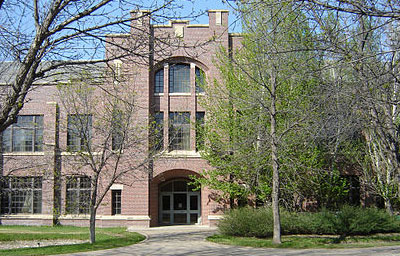
Certificates in engineering innovation and entrepreneurship are offered by the Ron and Jane Graham School of Professional Development in the College of Engineering and the Edwards school of business. You can earn a certificate concurrently alongside an engineering degree program or as a standalone program.
- Certificate in Engineering Innovation and Entrepreneurship
- Certificate in Engineering Entrepreneurship - Leading Innovative Teams
- Certificate in Engineering Entrepreneurship - New Product Market
If you are already enrolled at USask, consult your academic advisor regarding enrolling in this program.
Admission requirements
All applicants to this program must meet the following requirements in order to be considered for admission:
- Completed at least 60 credit units of post-secondary coursework
- Minimum average of 60% on 18 or more transferable units from a recognized and/or accredited post-secondary institution; average calculated on all attempted courses which are transferable to the University of Saskatchewan
- Proficiency in English
Application deadlines
| Start term | Application deadline |
|---|---|
| Winter January 2027 |
Dec. 1, 2026 Documents due: Dec. 15, 2026 |
| Fall September 2027 |
May 1, 2027 Documents due: June 1, 2027 |
| Winter January 2028 |
Dec. 1, 2027 Documents due: Dec. 15, 2027 |
Ready to apply?
Both external applicants and current USask students must complete the online application form by the application deadline.
If you are a current USask student, consult your academic advisor regarding enrolling in this program. Current USask students do not need to pay an application fee.
If you are new to USask, create an admissions account and start your application today. When you are ready to submit your application, you will be assessed a non-refundable application fee of $120 CAD.
Related programs
- Applied Computing
- Chemical Engineering
- Civil Engineering
- Computer Engineering
- Electrical Engineering
- Environmental Engineering
- Geological Engineering
- Management
- Mechanical Engineering
If you are looking for graduate level (master's or Ph.D.) programs please consult our graduate students' website.